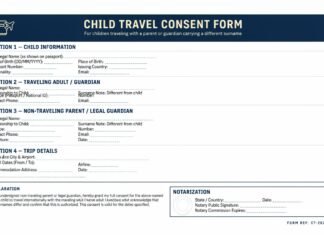

International travel with an adopted child can involve a document trail that looks different from the records used by a biological family. The child may have an adoption certificate instead of an original birth certificate for everyday legal purposes, the parents and child may use different surnames, and the passport may reflect a name that changed after the adoption. An adopted child travel muvafakatname helps organise those facts by identifying the child, the adoptive parent or legal guardian, the person giving consent, and the journey being approved.
This guide focuses on relationship evidence, adoption records, name differences, and legal guardian information. It does not assume that every adoption follows the same law. Domestic, intercountry, stepparent, relative, and guardianship arrangements can produce different documents, so families should check the requirements of the passport authority, embassy, airline, destination, transit country, and any court involved.
Start With the Child’s Current Legal Identity
Use the child’s full legal name exactly as it appears in the passport that will be used for the trip. Record the date of birth, nationality, passport number, issuing country, expiry date, and usual address. If the adoption changed the child’s name, do not mix the former and current names throughout the letter. Use the current legal name first and refer to the former name only where it is needed to connect older records.
The adopted child travel muvafakatname should also identify each accompanying adoptive parent or other authorised adult by passport name and number. A consistent set of names across the consent letter, booking, visa application, passport, and adoption documents reduces avoidable questions. Where transliteration or spelling varies between countries, carry official evidence or a certified translation that shows the connection.
Use the Adoption Certificate as Relationship Proof
An adoption certificate or final adoption order is often the central document proving the legal parent-child relationship. It may show the child’s post-adoption name and the adoptive parent or parents. Some countries issue a new certificate that replaces the original birth record for legal purposes, while others use a court decree, registry extract, or certificate of adoption.
Carry the version accepted by the relevant authority. Depending on the route, that may mean an original, certified copy, authenticated copy, or translated copy. The adopted child travel muvafakatname should not attempt to summarise confidential adoption history that is unnecessary for travel. Its role is to point clearly to the legal record establishing the relationship.
When the Adoption Order Is More Important Than the Certificate
A certificate may not yet have been issued after a recent adoption, or the family may be travelling while post-adoption registration remains in progress. In that situation, a final court order may be the main evidence. Interim placement, fostering, guardianship, or pre-adoption custody documents may not have the same legal effect as a completed adoption.
Before preparing an adopted child travel muvafakatname, confirm whether the adult is legally an adoptive parent, a guardian, a prospective adopter, or a temporary caregiver. Those roles should not be described as interchangeable. The document should state the exact legal status supported by the order and should not claim that an unfinished adoption is final.
Explain Different Surnames Through a Clear Document Chain
An adopted child may retain a birth surname, take an adoptive surname, use a double surname, or have a passport issued before a later name update. Adoptive parents may also have different surnames from each other. The difference is not evidence of an invalid relationship, but officials may ask for records connecting the names.
A practical chain may include the child’s passport, adoption certificate or decree, the parent’s passport, and any marriage, divorce, deed poll, or legal name-change record. In the adopted child travel muvafakatname, a short explanation is enough: for example, “The child retains the surname recorded before adoption, while the accompanying parent uses the surname shown in her current passport.” Let the official documents provide the detailed proof.
Identify Every Person With Parental or Guardian Authority
Travel consent should come from the person or people who currently hold the relevant legal authority. After a full adoption, adoptive parents commonly hold parental responsibility, but the precise effect depends on the law and the order. A guardian may have authority under a court appointment, while a foster parent, institution, or prospective adopter may need additional permission.
The adopted child travel muvafakatname should list the legal name, address, telephone number, email, passport or identity details, and legal role of each person giving permission. If only one adoptive parent travels and another stays home, the non-travelling parent may need to sign. If a court order grants one parent sole authority, carry the relevant order rather than relying on a statement in the letter.
Do not request or include consent from a birth parent merely because their name appears in an older record unless applicable law, an adoption order, or official guidance says that person retains relevant authority. Equally, do not assume that an adoption automatically removed every restriction without reading the final order.
What the Consent Letter Should Cover
The letter should connect the legal relationship to one identifiable journey. Include the destination, departure and return dates, purpose of travel, transport details, accommodation, and the name of the accompanying adult. State clearly that the authorised child may travel with that person for the specified period.
An adopted child travel muvafakatname may also record the consenting parent’s reachable phone number, email, and address. Contact information should work during departure, transit, and arrival. The non-travelling parent or guardian should keep a copy of the letter and itinerary so that they can confirm the details if contacted.
The Canadian child consent guidance explains that a consent letter can show that a child has permission to travel when a parent or person with decision-making responsibility is not accompanying them. Families should still confirm whether the destination, transit country, or airline requires a particular form, witness, or notarisation.
Check Passport, Citizenship, and Immigration Records Separately
Adoption evidence proves a family relationship, but it does not by itself prove that the child holds a particular citizenship or may enter another country. A child adopted abroad may have a passport, visa, residence permit, citizenship certificate, or immigration record issued through a separate process.
The UK government’s passport guidance for adopted children identifies adoption certificates showing the adoptive parent’s details among the supporting documents required in relevant passport cases. This illustrates why the adopted child travel muvafakatname should be supported by current identity and immigration records rather than treated as a replacement for them.
Translation, Notarisation, and Authentication
When adoption or guardianship records are issued in a language not accepted by the destination or embassy, obtain the required translation. Some authorities may request certification, notarisation, legalisation, or an apostille. These processes are different, and one does not automatically replace another.
Confirm the exact formalities before signing the adopted child travel muvafakatname. A notary may verify a signature or copy according to local law, but cannot turn an interim placement into a final adoption or correct an inaccurate court order. Keep the source document with its translation and authentication page.
Prepare a Travel Document Packet
Place the papers in an order that allows an unfamiliar official to understand the relationship quickly:
- The child’s valid passport and required visa or residence document.
- The accompanying parent’s passport.
- The adoption certificate or final adoption decree.
- Any official record connecting former and current names.
- The original signed travel consent where another authorised person is not travelling.
- A copy of the non-travelling parent or guardian’s identification.
- Relevant custody, guardianship, or court permission.
- The return booking, itinerary, accommodation, and emergency contacts.
Keep the adopted child travel muvafakatname and primary supporting documents in hand luggage. A secure digital backup can help after loss, but it may not replace an original or certified copy when one is required.
Embassy and Border Preparation
Adoption records can contain sensitive information about birth relatives, court proceedings, or the child’s early history. Carry only the records required for travel, store them securely, and avoid giving copies to people who have no official role. When an authority needs evidence, provide the relevant document rather than discussing private family circumstances publicly.
Visa officers may examine the child’s current identity, the legal relationship of the adoptive parent, the authority of the person signing, the purpose of travel, and the planned return. Border officers may also ask why the names differ or how a non-travelling parent or guardian can be contacted.
Answer briefly and truthfully. Avoid giving a rehearsed family history when a passport and adoption certificate answer the question. If the child is old enough to respond, the child should not be coached to use legal language or describe a relationship differently from the official documents.
For general child-travel consent principles, read the muvafakatname child travel guide. To understand when a consent document can be recognised and what may affect its use, review muvafakatname legal validity. Families adding the document to a visa file can follow the embassy submission guide.
Final Review Before Departure
A carefully prepared adopted child travel muvafakatname shows the child’s current identity, the adoptive parent’s legal relationship, any name changes, the authority of the person signing, and the exact journey approved. Its strength comes from consistency with the adoption order, passports, visas, court records, and itinerary.
Review the adopted child travel muvafakatname and every supporting document shortly before travel. Check validity dates, signatures, translations, contact numbers, custody terms, and destination requirements. When the adoption is not final, the order is unclear, or more than one country’s law affects the relationship, seek advice from the relevant embassy, passport authority, adoption authority, or a qualified lawyer.
Legal notice: This article provides general educational information and is not legal advice. Adoption, guardianship, citizenship, child-travel, and document-authentication rules vary by country and individual circumstances. Confirm current official requirements before relying on any consent letter or supporting record.