
Many parents and travelers ask whether they can prepare one consent letter and keep using it again and again. It sounds practical. Instead of drafting a new document for every journey, they want one permission letter that covers several trips. In theory, this may seem efficient. In practice, however, the answer is not always simple.
A multiple trip muvafakatname can sometimes work, but it is not always the safest choice. Much depends on the purpose of the document, the wording inside it, the country involved, the age of the child, the travel pattern, and the expectations of the institution reviewing it. In many cases, a letter written for one specific trip is easier to trust and more likely to be accepted without questions.
What Is a Multiple Trip Muvafakatname?
A multiple trip muvafakatname is a consent document that is written broadly enough to cover more than one journey instead of just one single departure and return. Rather than naming only one trip, it may refer to repeated travel within a stated period, such as a school year, holiday season, or visa duration.
For example, some families want this kind of document when:
- a child travels regularly with one parent
- the child studies abroad and travels back and forth
- the family expects several visa-related trips in a short period
- one spouse needs repeated written consent for administrative use
The idea is understandable. But before relying on a multiple trip muvafakatname, it is important to know how authorities usually view travel consent letters.
The Short Answer
Yes, one muvafakatname can sometimes be drafted for multiple trips, but it may not always be accepted by airlines, visa officers, border officials, schools, or consulates. In most real-world situations, a trip-specific document is safer because it clearly states destination, dates, and purpose. A general letter may look convenient, but it can also look vague.
This is the main issue with a multiple trip muvafakatname: flexibility for the family may create uncertainty for the person reviewing the document.
Why Trip-Specific Letters Are Often Preferred
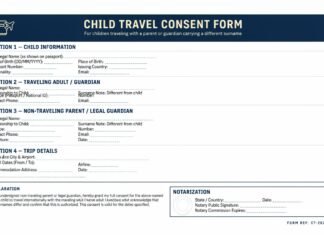
Travel consent letters are usually strongest when they identify the exact travel plan. Officials often want to see:
- who is travelling
- with whom the child is travelling
- where the child is going
- when the trip begins and ends
- who gave consent
When those details are specific, the letter is easier to understand and verify. When the wording becomes too broad, questions can arise. For example, if the document says the child may travel “from time to time” or “whenever needed,” an officer may wonder whether the consent is still current, whether the parent truly approved the present trip, or whether the document is being reused beyond what was originally intended.
That is why a multiple trip muvafakatname may be acceptable in some situations but still less persuasive than a document linked to one clearly identified trip.
When One Letter for Multiple Trips May Work
There are situations where a broader consent letter can still be useful. It may work better when the travel pattern is regular, limited, and easy to describe in advance. Examples include:
- repeated travel between the same two countries during a school term
- several short visits with one parent under an established custody arrangement
- frequent land border crossings in a familiar travel routine
- repeated travel for an ongoing student or residence situation
In such cases, a multiple trip muvafakatname may be drafted with a defined validity period and a clear explanation of the recurring travel purpose. Even then, it is smart to keep the wording narrow enough to show the parent or guardian knew what kind of trips were being authorized.
When It Is Riskier to Use One Letter for Multiple Trips
A broad letter becomes riskier when:
- the child’s destinations may change
- different adults may accompany the child on different trips
- the parents are divorced or in dispute
- the letter may be reviewed by visa authorities or foreign consulates
- the child is travelling alone
- there is any possibility of challenge over parental consent
In these situations, a multiple trip muvafakatname may create more questions than it solves. A reviewer may decide that a fresh letter with current dates and current details is more reliable.
Does Legal Validity Mean Automatic Acceptance?
No. This is where many people get confused. A letter may look legally reasonable and still not satisfy the institution reviewing it. A broad consent letter may be valid as a record of general permission, but that does not mean every airline, embassy, or border officer will treat it as sufficient for each new trip.
That is why the question is not only whether a multiple trip muvafakatname can exist. The real question is whether the next reviewer will be comfortable relying on it for the exact trip in front of them.
For a fuller explanation of duration and legal effect, readers should also review how long a muvafakatname remains valid. Validity and acceptance are related, but they are not exactly the same thing.
What Makes a Multiple Trip Letter Stronger?
If someone truly needs a multiple trip muvafakatname, the document should still be drafted carefully. A stronger version usually includes:
- full name and identity details of the child
- full name of the parent or guardian granting consent
- name of the accompanying parent or adult, if known
- the countries or locations covered by the authorization
- the time period during which repeat travel is allowed
- the reason for repeated travel
- a clear statement that the consent applies to multiple trips within that limited period
- signature and preferably notarization
Without these details, the document may become so broad that it loses practical credibility.
Should You Include a Date Range?
Yes, absolutely. One of the most important ways to make a multiple trip muvafakatname more credible is to define a time range. For example, the letter may state that it applies to repeated travel between certain dates, such as from June 1 to August 31, or for one academic year.
A document without clear timing may raise concerns because consent is generally strongest when it is tied to a known period. Open-ended letters can look outdated or overly vague. That is one reason officials often prefer travel letters with specific departure and return information.
Should the Destinations Be Named?
Yes, if possible. If repeated travel will happen only between known places, it is better to name them. A multiple trip muvafakatname that mentions travel between Turkey and the United Kingdom, or between Canada and the child’s country of residence, is more precise than a letter that simply says “international travel.”
Precision helps because it shows the parent or guardian understood what they were authorizing. The more general the destination language becomes, the more room there is for doubt later.
Is Notarization More Important for Multiple Trips?
Usually yes. If you are trying to rely on one document for several journeys, notarization becomes even more helpful. A notarized multiple trip muvafakatname is more likely to be taken seriously because the signature was formally authenticated. This does not guarantee acceptance everywhere, but it improves the document’s credibility.
Notarization is especially important if:
- the child is travelling without both parents
- the letter may be reviewed abroad
- there are custody issues
- the document may be translated or legalized
What About Married Couples?
In some cases, people assume that if the parents are married, a broader consent letter will automatically be accepted. That is not always true. Marriage status may make the situation look more straightforward, but it does not remove the possibility that officials may still want clear trip-specific consent.
That is why family circumstances should be considered carefully. If your use case involves spouses and routine family travel, it may help to read how muvafakatname issues apply to married couples before deciding on broader wording.
Can You Reuse an Older Muvafakatname?
Sometimes people try to reuse an old document from a previous trip. That is different from creating a properly drafted multiple trip muvafakatname from the beginning. Reusing an old single-trip letter can be risky because the dates, destination, and purpose may no longer fit the present journey.
Even if the relationship between the parent and child has not changed, an outdated letter may look weak. Reviewers may wonder whether the consent is still active, whether the parent still agrees, or whether the document was simply recycled for convenience.
When Is a Fresh Letter the Better Option?
A fresh letter is usually the better option when:
- the new trip has different dates
- the destination is different
- the child is travelling with a different adult
- the old letter has no clear ongoing date range
- the original document looks old or outdated
- the receiving institution specifically requests a current letter
In these situations, creating a new letter is often easier than defending an older or broader one. If the previous document has expired or no longer fits, the right next step may be to prepare a fresh consent rather than force a multiple trip muvafakatname into a case where it no longer works.
That is also why some families eventually need to renew a muvafakatname instead of continuing to rely on an earlier version.
Best Practical Advice
The safest practical advice is simple: use one letter for multiple trips only when the travel pattern is regular, the destinations are known, the time period is limited, and the receiving party is likely to accept broader wording. In all other cases, prepare a fresh letter for each trip.
This approach reduces risk, avoids arguments at borders or consulates, and makes the document easier to trust. A multiple trip muvafakatname can be convenient, but convenience should not come at the cost of clarity.
Common Mistakes to Avoid
- writing an open-ended letter with no end date
- failing to identify destinations
- using vague phrases like “any future travel”
- reusing a clearly expired document
- ignoring changes in custody or family arrangements
- assuming notarization alone solves every issue
Most problems arise not because multiple-trip consent is impossible, but because the wording is too vague to inspire confidence.
Final Answer
Yes, a multiple trip muvafakatname can sometimes be used, but it is not always the safest or most reliable option. If the letter is carefully drafted with a limited date range, identified destinations, a clear travel pattern, and proper notarization, it may work in some recurring travel situations. But for many visa, border, and airline purposes, a trip-specific letter is still the stronger choice.
When in doubt, choose clarity over convenience. A shorter, newer, trip-specific muvafakatname is often more effective than a broad document that leaves too much open to interpretation.
For official guidance on child travel consent letters and what they should include, see Canada’s government page on consent letters for children travelling outside Canada. For additional supporting information on child travel permissions and notarized letters, see this child travel documents guide.