
If you are hearing the word for the first time, a muvafakatname can feel confusing. People see it in travel, visa, student, notary, and family-related situations, but they are often unsure what the document actually does or when it becomes necessary. That uncertainty is exactly why a strong muvafakatname faq page is so useful.
This guide answers the questions people ask most often in plain language. The goal is simple: help readers understand what a muvafakatname is, when it may be needed, how it should be prepared, and what mistakes to avoid before relying on it for real use.
1. What is a muvafakatname?
A muvafakatname is a written consent document. It is used when one person with legal authority gives permission for something to happen, such as a child traveling, a student applying, a spouse handling a document, or another person acting in a limited approved way.
If you want the full starting point before reading the rest of this muvafakatname faq, you can review what a muvafakatname is.
2. Is a muvafakatname always required?
No. It is not needed in every situation. Whether it is required depends on the purpose, the country, the institution, and the family or legal circumstances. Some cases treat it as essential, while others treat it as a supporting document that helps avoid questions and delays.
3. When is a muvafakatname most commonly used?
It is commonly used in situations involving:
- child travel with one parent or another adult
- minor students and guardianship matters
- visa applications
- certain spouse-related administrative issues
- notarial or embassy submissions
In practical terms, the document is used whenever clear written permission matters.
4. Can I write my own muvafakatname?
Yes, in many cases you can prepare your own draft, especially when the situation is straightforward. The key is to make sure the wording is clear, the names and dates are accurate, and the document matches the real purpose for which it will be used.
This is one of the most common questions on any muvafakatname faq page because many users assume a lawyer must always write it. In reality, many people can draft a usable version themselves if they follow a proper structure.
If you want to explore that option, review whether you can write your own muvafakatname.
5. Does a muvafakatname need notarization?
Not always, but notarization is often recommended, especially when the document will be used for international travel, visa processing, or any official situation where identity verification matters. A notarized version generally carries more weight because the signer’s identity has been formally checked.
6. Is a signature alone enough?
Sometimes a signature may be enough for informal or low-risk use, but in more formal settings a simple signature may not be strong enough on its own. Airlines, border authorities, schools, visa centers, and consulates may be more comfortable with a notarized document.
That is why this muvafakatname faq does not treat signature and notarization as the same thing. They are related, but not identical in practical value.
7. What should a muvafakatname include?
The exact contents depend on the purpose, but most strong versions include:
- full names of the relevant people
- relationship between them
- passport or ID details where relevant
- travel or use purpose
- dates and destination if travel is involved
- a clear statement of consent
- signature
- notarial details if applicable
The strongest documents are always specific. Vague permission letters are more likely to cause confusion later.
8. Can a muvafakatname be used for child travel?
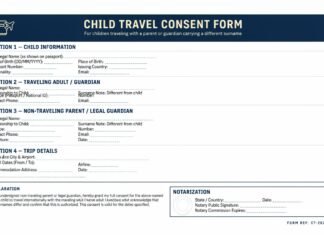
Yes, this is one of the most common uses. When a child travels alone, with one parent, or with another adult, a written consent letter may be requested to show that the trip is approved by the parent or guardian who has the right to give that consent.
That is why child travel questions appear so often in a muvafakatname faq. Travel is one of the areas where people most often need this document urgently.
9. Can one muvafakatname cover multiple trips?
Sometimes yes, but it is not always the safest choice. A broader letter may work when repeated travel follows a clear pattern and the date range is limited. However, many officials prefer trip-specific consent because it is easier to verify and trust.
10. How long is a muvafakatname valid?
That depends on how it is written and how it will be used. Some documents are tied to a single event or trip. Others may cover a limited time period. A document may still look valid on paper but be too outdated for comfortable official use if important facts have changed.
This is one of the most practical questions in any muvafakatname faq, because people often focus only on expiry and forget that changing details can also weaken a document.
11. Can I update an old muvafakatname?
If the document is still only a draft, it may be possible to correct it before it is finalized. But if the document has already been signed or notarized and important facts change, a fresh clean version is usually safer than trying to edit an old one informally.
12. Can I send a muvafakatname by email?
Yes, in many situations you can send it by email, especially if the receiving party accepts scanned or digital copies. However, you should make sure the final file is clear, readable, complete, and ideally saved as PDF before sending.
Email may be convenient, but this muvafakatname faq would be incomplete without saying that convenience is not the same as formal acceptance. Always check what the receiving institution actually wants.
13. Should the file be in Word or PDF format?
Word is better while the document is still being drafted or corrected. PDF is usually better once the text is final, because the layout stays more stable for printing, emailing, and official review. Many people keep both versions: one editable file and one final PDF.
14. Can I use an electronic signature?
Sometimes electronic signing may be possible, but acceptance depends on the institution and the purpose. For sensitive or official cross-border use, a handwritten signature and notarized process are usually the safer practical choice unless the receiving authority clearly accepts electronic execution.
15. Does a muvafakatname need to be in English?
Not always, but English is often the safest practical language for international use. If the original document is in another language, a translation may be helpful or necessary depending on where it will be reviewed.
That is why many people reading a muvafakatname faq eventually prepare both an original-language version and an English version for clarity.
16. Is there one universal template for every situation?
No. There is no single universal version that fits every case perfectly. A child travel consent letter, a spouse-related authorization, and a student-related document may all need different details. Templates are useful starting points, but they should be adjusted to fit the actual purpose.
17. Can I reuse an old muvafakatname?
Sometimes, but it depends on whether the old document still matches the current facts. If the dates, destination, accompanying person, or legal context changed, reusing the old version may create problems. A newer, cleaner version is often stronger than trying to stretch an outdated one.
18. What are the most common mistakes people make?
Some of the most common mistakes include:
- spelling names differently from the passport
- forgetting travel dates or destination
- using vague wording
- relying on an unsigned or unclear file
- sending a blurry scan
- assuming a template is complete without reviewing it
- ignoring notarization when it is clearly advisable
If you want to avoid the most frequent problems, read common muvafakatname mistakes before finalizing your document.
19. What supporting documents may be needed with it?
That depends on the case, but often the muvafakatname works best together with supporting records such as:
- passport copy
- birth certificate copy
- national ID copy
- custody or guardianship documents
- travel itinerary
- proof of relationship where relevant
This is especially important in travel and family-related cases where the consent letter alone may not answer every official question.
20. What is the safest general advice?
The safest advice is to keep the document clear, specific, and current. Match the wording to the real purpose. Use accurate names and dates. Do not rely on vague permission. If the case is official or cross-border, consider notarization and prepare a clean PDF copy for sharing or printing.
That is the main practical lesson of any good muvafakatname faq: clarity is stronger than convenience.
Final Thoughts
A muvafakatname does not have to be mysterious. In most cases, it is simply a structured written consent document. The challenge is not understanding the basic idea. The challenge is preparing it in a way that matches the real legal or administrative need.
That is why a clear muvafakatname faq matters so much. People usually do not need complicated theory. They need straight answers about when the document is needed, what it should contain, how it should be signed, and what can go wrong if it is prepared carelessly.
For official guidance on child travel consent documents, see Canada’s child travel consent guidance. For additional supporting information on travel documents for minors, see this child travel documents guide.