

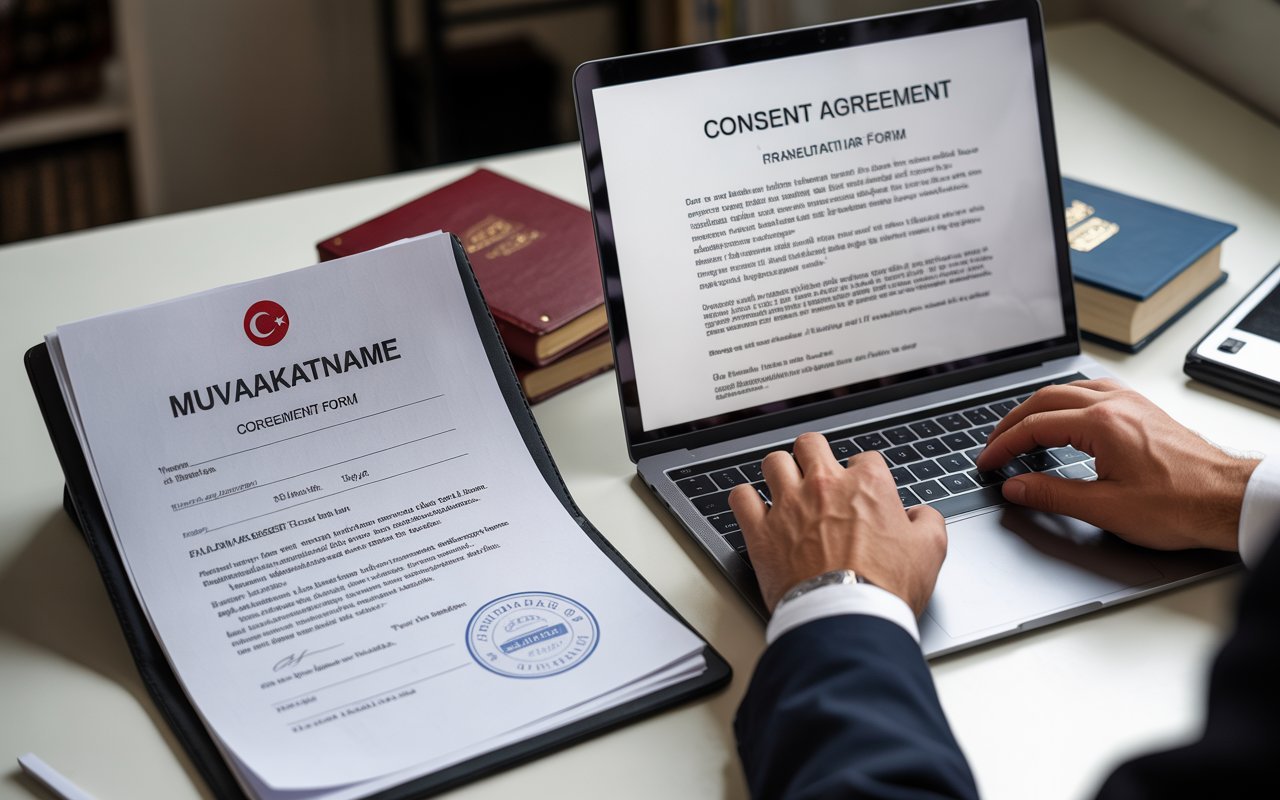
Knowing how to translate Muvafakatname documents correctly is important when submitting consent letters for international visa applications, child travel, student travel, or dependent travel cases. Many embassies and immigration offices may not accept a document written in a foreign language unless an accurate translation is provided. Even a well-written Muvafakatname can create problems if the translation is incomplete, inaccurate, uncertified when required, or inconsistent with the original document.
This guide explains how to translate Muvafakatname documents for international use, when translation may be required, which languages are commonly accepted, and how to avoid common translation mistakes. A clear and accurate translation helps embassies, notaries, immigration officers, and other authorities review the consent document more easily.
Why Translation of a Muvafakatname Is Often Required
Embassies review documents in specific languages so they can verify details quickly and accurately. When a Muvafakatname is written in a local language, immigration officers or visa staff may not be able to review it without translation. This is why many authorities ask applicants to translate Muvafakatname documents into an accepted language such as English, French, German, or the official language of the destination country.
Providing a clear translation helps the reviewing authority confirm consent details, identity information, travel purpose, dates, and signatures without unnecessary delay. If you are using a consent letter for Schengen travel, you may also review this Schengen Muvafakatname sample to understand how visa-related consent wording is usually structured.
When Do You Need to Translate a Muvafakatname?
You may need to translate Muvafakatname documents in the following situations:
- The original document is not written in an embassy-accepted language
- The destination country requires documents in its official language
- The applicant is submitting documents to a foreign embassy
- The consent letter is being used for international child travel
- The document is part of a visa, student, residence, or family application
- The embassy specifically requests a translated version
Even if translation is not clearly listed in the checklist, providing an accurate translation may reduce questions when the original language is not understood by the receiving authority.
Which Languages Are Commonly Accepted?
Accepted languages depend on the destination country, embassy, and type of application. Many embassies accept English translations, even if English is not the official language of the destination country. Other authorities may require translation into their national language.
Before translating, always check the embassy or official document checklist. Using the wrong language can lead to a request for re-submission, even if the translation itself is accurate.
Certified vs Non-Certified Translation
One of the most important points when you translate Muvafakatname documents is understanding whether certification is required. A certified translation usually includes a statement from the translator or translation agency confirming that the translation is complete and accurate.
Embassies often require certified translations for legal or consent-related documents, especially in cases involving minors, dependent travel, family sponsorship, residence permits, or long-term visas. A non-certified translation may be rejected if certification is required by the receiving authority.
Step-by-Step Process to Translate a Muvafakatname
Step 1: Prepare the Final Original Document
Before translation, make sure the original Muvafakatname is complete, correct, signed if required, and ready for use. Any change after translation may require a new translation, especially if names, dates, passport numbers, or consent wording are changed.
Step 2: Choose the Required Language
Confirm which language the embassy or authority accepts. Do not assume English is always enough. Some countries may require translation into their official language or may request a certified version in a specific format.
Step 3: Use a Professional Translator
Legal and consent documents require precise wording. A professional translator familiar with legal, visa, or official document terminology can reduce the risk of mistakes. Automated translation tools may be helpful for basic understanding, but they should not be relied on for final legal or embassy submission.
Step 4: Review the Translation Carefully
Names, passport numbers, dates, addresses, destinations, and relationship details must match the original exactly. Even small discrepancies can create questions during visa or immigration review.
Step 5: Attach Certification If Required
If certification is required, make sure the translator or translation agency provides the correct declaration, signature, stamp, or contact details according to the authority’s requirement. Keep the certified translation attached to the original document where possible.
How to Format the Translated Document
Translated documents should follow a clean and readable format. Most embassies and authorities prefer:
- The translated text typed clearly
- The original document and translated version submitted together
- Translator certification included when required
- Names, dates, numbers, and signatures kept consistent
- Page order arranged clearly for easy review
Keeping both versions together helps officers compare details easily and reduces the chance of confusion.
Common Mistakes to Avoid When Translating
Many applicants face delays because of avoidable translation mistakes. When you translate Muvafakatname documents, avoid:
- Using automated translation tools for final legal documents
- Changing names, dates, or passport numbers during translation
- Submitting a summary instead of a full translation
- Missing translator certification when it is required
- Submitting only the translated version without the original
- Using a language not accepted by the embassy
Accuracy and completeness are critical. The translated document should reflect the original document clearly and completely.
How Translation Affects Form Completion and Verification
A translated Muvafakatname must align with all other submitted forms. Inconsistent wording between the translated document and visa forms can create confusion. For example, if the travel purpose, dates, or applicant name is written differently in the translation, the embassy may ask for clarification.
You may find it helpful to review how to fill a Muvafakatname form properly to make sure the original document is complete before translation begins.
Online Verification and Translated Documents
Some embassies, notaries, or institutions may verify documents digitally or compare translated documents with original records. Translated versions must still match the original content exactly for verification to be smooth.
Additional guidance on this process is available in how to verify a Muvafakatname online.
Should You Translate Before or After Notarization?
The correct order can depend on the country and the receiving authority. In some cases, the original document is signed and notarized first, and then the notarized document is translated. In other cases, both the original and translation may need to be certified or submitted together.
If notarization is required, check whether the embassy wants the translation of the notarized version or only the translation of the original text. You can also review how to get a notarized Muvafakatname before preparing the translation.
Helpful Guidance for International Applicants
Applicants often consult official travel documentation guidance to understand translation expectations. Information provided by the U.S. government travel documentation guidance may help explain how supporting documents are reviewed in international travel cases. Some readers also review general information about certified translations to understand translator certification standards.
Final Summary
Learning how to translate Muvafakatname documents correctly is an important step for international visa, travel, child consent, student, and dependent applications. The translation should be accurate, complete, and prepared in a language accepted by the receiving authority.
By using the correct language, checking whether certification is required, keeping the original and translated versions consistent, and avoiding common mistakes, applicants can submit a stronger translated consent document for embassy or immigration review.