
Home Legal & Notary How to Fill Out a Muvafakatname Form Properly

How to Fill Out a Muvafakatname Form Properly

14
fill muvafakatname form

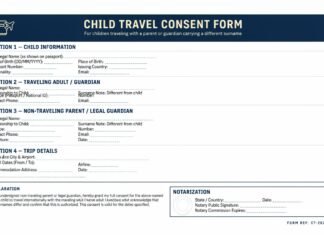
If you need to fill muvafakatname form correctly for visa, travel, or legal consent purposes, it is important to understand each section before writing anything. A muvafakatname is a formal consent document, and even small mistakes can create delays or rejection. Many applicants assume it is just a simple letter, but in practice it must match official records, travel details, and identification documents exactly. That is why learning how to complete the form properly is essential.

A muvafakatname form is commonly used when one parent allows a child to travel, when a guardian provides written consent, or when a person authorizes another party for a limited legal or travel purpose. Because this document can be checked by embassies, immigration officers, and notaries, every field should be completed carefully and clearly.

Why It Is Important to Fill Muvafakatname Form Correctly

When people try to fill muvafakatname form without understanding the format, they often leave out dates, write names incorrectly, or use wording that does not match supporting documents. These problems may seem small, but they can lead to document rejection, requests for revision, or unnecessary questioning at the embassy or airport.

A correctly completed form helps in three ways. First, it proves that consent has been given clearly and voluntarily. Second, it makes verification easier for officials. Third, it protects the applicant from last-minute complications. If the form is incomplete or unclear, authorities may doubt whether the permission is genuine.

If your document will be used in another language or another country, it may also help to review how to translate a Muvafakatname for international use before final submission.

What a Muvafakatname Form Usually Includes

Before you fill muvafakatname form, you should know what sections are normally included. The exact layout can vary, but most forms contain these core parts:

  • Details of the person giving consent
  • Details of the person receiving consent
  • Purpose of authorization
  • Travel or usage period
  • Destination or relevant institution
  • Signature and date

Some forms may also include passport numbers, national ID information, address details, relationship between the parties, and notary fields.

Step 1: Write the Full Name Exactly as in Official Documents

The first rule when you fill muvafakatname form is simple: names must match passports or national ID cards exactly. Do not shorten names. Do not use nicknames. Do not leave out middle names if they appear in official records.

For example, if the passport shows three names, the same three names should appear in the form in the same order. This prevents confusion during document review. In visa and travel matters, spelling consistency is extremely important.

Step 2: Add Identification Information Carefully

Most consent forms require identification details for both parties. This may include passport number, ID number, date of birth, or citizenship. When you fill muvafakatname form, check every number twice before finalizing the document.

One wrong digit in a passport number can create a serious problem. Officials compare the form against attached documents, and mismatched details can delay approval. It is always better to complete this section slowly rather than rush through it.

Step 3: Explain the Purpose of Consent Clearly

Another key step when you fill muvafakatname form is stating why the consent is being given. This part should be direct and specific. Common examples include:

  • Child travel with one parent
  • International travel for study
  • Visa application support
  • Temporary authorization for a legal purpose

A vague sentence is less useful than a clear one. For example, instead of writing “for travel,” write “for international travel to apply for a student visa” or “for tourism travel during the stated period.” Specific wording makes the form stronger and easier to understand.

Step 4: Enter Dates and Validity Period Correctly

When you fill muvafakatname form, never ignore the validity period. The document should clearly state when the consent begins and when it ends. This protects both sides because the authorization is limited to a defined time.

Some people make the mistake of leaving the date section blank, assuming the travel date is enough. That is risky. It is better to mention the issue date, the validity period, and where necessary, the actual travel dates. Clear time limits show that the document has a real and lawful purpose.

Step 5: Mention the Relationship Between the Parties

In many cases, the form should explain the relationship between the person giving consent and the person receiving it. For example, the relationship may be parent and child, guardian and minor, or spouse and applicant.

This is especially important in visa and travel cases involving children. If the relationship is not obvious from the names alone, it should be written clearly in the document. That makes the form easier to verify and reduces questions from officials.

Step 6: Review Language and Tone

A muvafakatname is a formal document, so the language should be clear, professional, and neutral. When you fill muvafakatname form, avoid emotional phrases, unnecessary storytelling, or informal wording. The goal is not to impress the reader with style. The goal is to communicate consent in a legally understandable way.

If the form will later be shared digitally, it is also useful to understand how documents may be transmitted. For that reason, some applicants also review how to send a Muvafakatname via email after completing the document.

Step 7: Check Whether Printing Is Required

Many applicants prepare the form digitally but forget that some authorities want a printed and signed version. Before you finish, confirm whether the document must be printed, notarized, or both. If printing is required, make sure the final version is clean, readable, and properly aligned on the page.

A useful next step after you fill muvafakatname form is to review how to print a Muvafakatname properly so the final copy is presentable and ready for official use.

Step 8: Sign in the Correct Place

One of the most common mistakes people make is signing in the wrong place or forgetting to sign at all. A muvafakatname form without signature is usually incomplete. If the form includes a signature block, use that exact area. If a notary will witness the signature, do not sign in advance unless instructed.

Where child travel is involved, the signature may need to come from one parent, both parents, or a legal guardian, depending on the situation. Always check the requirement before completing the final copy.

Step 9: Attach Supporting Documents if Needed

Sometimes the form alone is not enough. Depending on the purpose, you may also need copies of passports, birth certificates, custody papers, visa documents, or proof of guardianship. These attachments strengthen the form because they support the information written inside it.

When you fill muvafakatname form, think of it as part of a full document package rather than a standalone page. The stronger and clearer the package is, the easier it is for officials to process it.

Common Errors to Avoid

Even people who understand the process can still make avoidable errors. Common mistakes include:

  • Misspelled names
  • Wrong passport numbers
  • Missing validity dates
  • Unclear purpose of consent
  • Unsigned forms
  • Different details between the form and attached records

The easiest way to avoid these mistakes is to review the completed form line by line before printing or sending it.

Helpful Guidance Before Final Submission

Some applicants also check the official U.S. travel documentation guidance to understand how consent documents are reviewed in travel-related cases. For broader background on formal document completion, some readers also look at general information about document forms to better understand how structured legal forms are used.

Final Summary

To fill muvafakatname form properly, you need accuracy, clarity, and consistency. Every section should match official records, every date should be clear, and every purpose should be specific. A well-completed form is easier to verify, more likely to be accepted, and far less likely to cause delays.

If you follow the steps above, review the final version carefully, and attach supporting documents where needed, your muvafakatname form will be much stronger for travel, visa, or legal use.

LEAVE A REPLY

Please enter your comment!
Please enter your name here