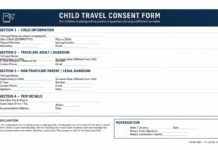


When a child travels internationally with a grandparent, family trust alone may not answer the questions asked by an airline, border officer, doctor, or hotel. None of those parties can automatically assume that the grandparent has permission to take the child abroad or authority to make urgent decisions. A grandparent travel muvafakatname helps explain the arrangement by linking the child, the accompanying grandparent, the parents, and the approved journey.
This guide focuses on four issues that are specific to grandparent travel: parental permission, proof of relationship, dependable emergency contacts, and medical decision authorization. Rules vary by country, airline, custody arrangement, and healthcare provider, so families should verify the full route before departure.
Parental Permission When Grandparents Accompany a Child
A grandparent may be the child’s most trusted caregiver, but that relationship does not always create legal authority. When neither parent is travelling, officials may ask who approved the journey and whether every person with parental responsibility agreed. A grandparent travel muvafakatname gives a written answer by naming the child, the grandparent, the consenting parent or parents, and the trip.
If both parents or legal guardians hold decision-making responsibility, both should normally sign unless an applicable law, court order, or official procedure provides otherwise. Where one parent has sole authority, the grandparent should carry supporting evidence, such as a custody or guardianship order.
The permission should be tied to a recognizable journey. Include the destination, departure and return dates, main transport details, accommodation address, and purpose of travel. State that the named grandparent may accompany and supervise the child for that period. Specific permission is easier to verify than an undated statement allowing travel anywhere.
Identify the Child, Grandparent, and Parents Clearly
Every name in a grandparent travel muvafakatname should match the relevant passport or identity document. Record the child’s full legal name, date of birth, passport number, nationality, and address. For the grandparent, include the full legal name, passport number, nationality, address, mobile number, and relationship to the child. Add complete details for the consenting parents.
Check for shortened names, former surnames, typing errors, and expired passport numbers before signing. If a parent or grandparent has changed names, carry the document that explains the change. When two grandparents travel, identify each separately rather than writing only “with the grandparents.”
How to Prove the Family Relationship
Matching surnames do not prove a relationship, and different surnames do not disprove one. The clearest evidence often forms a short document chain. The child’s birth certificate identifies the parents, while a parent’s birth certificate may identify the grandparent. Adoption records, guardianship papers, marriage certificates, or name-change documents may be relevant in other families.
For example, when a maternal grandmother travels, the child’s birth certificate can connect the child to the mother, and the mother’s birth certificate can connect her to the grandmother. The grandparent travel muvafakatname then connects those people to the approved journey. This is usually clearer than carrying a large bundle of unrelated records.
Use originals, certified copies, or ordinary copies according to the authority’s rules. Keep sensitive papers in hand luggage. A secure digital copy may help if something is lost, but it may not replace an original when one is required.
Emergency Contacts Must Be Usable
Include each parent’s mobile number with country code, email address, home address, and an alternative number where possible. A contact that remains switched off throughout the trip is of little value. Parents should keep their phones available during departure, transit, arrival, and any period when the child might require medical care.
Each parent should retain a copy of the signed grandparent travel muvafakatname, itinerary, accommodation details, and the grandparent’s contact information. If an officer calls, the parent should be able to confirm the destination, dates, accompanying adult, and planned return without relying on the travelling grandparent to explain everything.
Travel Consent and Medical Consent Are Different
Permission to cross a border is not always the same as permission to approve medical care. Travel consent shows that the child may go with the grandparent. Medical authorization explains what the grandparent may do if the child becomes ill or injured. Some families combine the subjects, while a jurisdiction, insurer, or healthcare provider may expect a separate form.
The medical section of a grandparent travel muvafakatname should therefore avoid vague wording. Subject to local law, parents may authorize the grandparent to seek assessment, communicate with healthcare professionals, receive necessary information, and consent to treatment when the parents cannot be reached.
Emergency and non-emergency decisions should not be treated as identical. Clinicians may provide urgent care under local law when delay threatens a child. Non-urgent treatment may follow different rules. Ask the child’s doctor, insurer, and destination authorities whether a separate form, witness, notarization, or translation is necessary.
What to Put in a Medical Authorization
A separate medical form can identify the child and grandparent, state the travel period, list parent contacts, and describe the decisions permitted. It may include the child’s doctor, insurer, policy number, allergies, regular medicines, important diagnoses, and emergency plan.
If both parents hold authority, obtain both signatures unless reliable legal guidance confirms that one is enough. The grandparent should carry the original with insurance information, medication records, and any clinician’s letter.
The U.S. Centers for Disease Control and Prevention advises families travelling with children to carry identifying information and contact numbers and to prepare for safety issues. Its guidance on travelling safely with children is useful supporting material, but it does not decide who may legally consent to treatment in a particular country.
Set Practical Limits on Medical Authority
Parents can state that the grandparent may obtain care, share necessary health information, and communicate with the insurer. They may ask providers to try both parents before non-urgent treatment and specify the order in which contacts should be called.
Do not state that the grandparent travel muvafakatname forces every hospital to accept the grandparent’s decision. Medical consent depends on local law, the child’s condition, the proposed treatment, and the provider’s policy. The document’s purpose is to record the parents’ intentions and make rapid contact possible.
Signing, Witnessing, and Notarization
Parents should review every travel detail before signing. Some destinations or airlines accept an ordinary signed letter; others request notarization, certification, or a particular form. A witness or notary may confirm identity or signing, but cannot create parental authority, correct false information, or override a court order.
Global Affairs Canada recommends that children travelling abroad without one or both parents or legal guardians carry a signed consent letter. Its official consent-letter guidance explains that border or transport authorities may ask for it. This provides a useful model, but families must still follow the rules applying to their citizenship, route, and destination.
Arrange signatures early. A parent living abroad may need time to use a notary or consular service and send an original. If the grandparent travel muvafakatname needs translation, use a qualified translator where certification is expected and keep the source document with the translation.
Prepare the Grandparent for Border and Emergency Questions
The grandparent should understand the itinerary, accommodation, return plan, custody position, and emergency procedure. An officer may ask simple questions about the relationship and purpose of travel. Answers should be calm, brief, and truthful. The child should not be coached to repeat a complicated script.
Arrange the papers in a practical order: passports, visas or residence documents, the original grandparent travel muvafakatname, parental ID copies, relationship evidence, medical authorization, insurance details, itinerary, and any relevant court record. Keep them accessible during check-in and inspection rather than in checked luggage.
Before leaving, compare the dates and names in the grandparent travel muvafakatname with the passports and tickets. Confirm that parent telephone numbers work internationally, the grandparent can reach the insurer, and the operating airline’s rules have not changed.
Related Muvafakatname Resources
For the broader role of parental permission, read the muvafakatname child travel guide. If the airline treats part of the journey as an unaccompanied-minor booking, review the minors travelling alone guidance. Families drafting their own letter can use the muvafakatname template as a starting structure and adapt it to official requirements.
Final Review
A carefully prepared grandparent travel muvafakatname records parental permission, connects the grandparent to the child through supporting documents, provides working emergency contacts, and explains the limits of medical authority. These details help officials and professionals understand the arrangement without relying on family assumptions.
Review the grandparent travel muvafakatname and the supporting packet shortly before travel because passport numbers, bookings, phone contacts, and health information can change. Where parents disagree, a court order restricts travel, or medical authority is uncertain, obtain advice from a qualified lawyer or the relevant authority before departure.
Legal notice: This article provides general educational information and is not legal or medical advice. Travel-consent and healthcare-decision rules vary by country and individual circumstances. Check current embassy, immigration, airline, healthcare, insurance, and court requirements before relying on any document.