
Home Visa & Travel Sample Muvafakatname for Turkish Citizens

Sample Muvafakatname for Turkish Citizens

51
muvafakatname turkish citizens

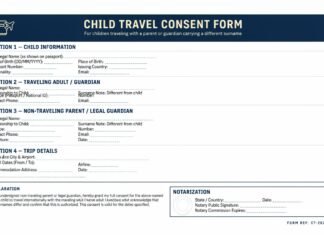
Muvafakatname Turkish citizens documents are often needed when a Turkish citizen must provide written consent for child travel, visa applications, student matters, family approval, or another limited official purpose. This document helps show that permission has been given clearly by a parent, guardian, spouse, or another authorized person. Because embassies, immigration offices, notaries, and foreign authorities may review the document, the wording should be accurate, formal, and easy to verify.

This guide explains how a Muvafakatname is commonly used for Turkish citizens, what details should appear in the document, and how to prepare a sample that is easier for embassies and authorities to understand. If you are new to this topic, you may first read what a Muvafakatname is to understand its basic meaning and purpose.

Why Turkish Citizens May Need This Document

A Muvafakatname is widely recognized as a consent document in situations where written approval matters. For Turkish citizens, it may be used when a child travels abroad, when a student applies for a visa, when a parent gives permission for international study, or when a foreign authority wants written proof of family approval. Although the exact requirement depends on the destination and the legal situation, the general purpose remains the same: to show that the relevant party gave consent knowingly and voluntarily.

For many applicants, the first challenge is not whether the document is needed, but how it should be written. A poorly prepared file may create unnecessary questions, especially if the destination country reviews the document under different legal expectations.

When a Muvafakatname for Turkish Citizens Is Commonly Used

A Muvafakatname Turkish citizens document may be useful in several situations, including:

  • Child travel with one parent or a guardian
  • Student visa or study abroad applications
  • Family-sponsored visa applications
  • Travel for educational programs or exchange programs
  • Limited legal authorization for official submissions

In these cases, authorities often want the purpose and scope of the consent to be written clearly. The document should not be vague. It should explain what is being approved, who is giving the approval, and who benefits from it. For child-related situations, you may also review child travel Muvafakatname requirements.

Basic Structure of a Muvafakatname for Turkish Citizens

The content of the document should be direct, formal, and easy to verify. A good sample normally includes:

  • Full legal name of the person giving consent
  • Full legal name of the person receiving or benefiting from the consent
  • Passport or national ID details
  • Purpose of the consent
  • Destination country or institution, if relevant
  • Validity period or travel dates
  • Date and signature

If the document relates to a child, the parent-child relationship should be clearly stated. If it relates to a student, the education purpose should be mentioned. These details help make the consent meaningful and usable. If you need a broader layout, you can also compare it with a standard Muvafakatname template.

Sample Muvafakatname for Turkish Citizens

Below is a simple example of how a Muvafakatname Turkish citizens document may be written:

I, [FULL NAME], holder of [PASSPORT OR NATIONAL ID NUMBER], hereby give my full consent to [FULL NAME OF CHILD / STUDENT / APPLICANT] to travel to [COUNTRY NAME] for the purpose of [STUDY / TOURISM / FAMILY VISIT / OTHER SPECIFIC PURPOSE]. I confirm that I am aware of the travel and related procedures and that this consent is given voluntarily for the stated purpose and period.

This consent remains valid from [START DATE] until [END DATE], unless otherwise limited by the receiving authority or related application process.

Signature: _______________________

Date: _______________________

This sample is short on purpose. The strongest consent documents are usually not overloaded with unnecessary language. Instead, they focus on identity, purpose, time period, and clear approval.

How to Adapt the Sample for Student Cases

When the document is being used for education, the wording should match the academic purpose clearly. For example, if the person is applying to study abroad, the consent should mention study, admission, student travel, or related academic activity. This makes the file more consistent with the rest of the visa application.

If your case involves education, it may also help to review how a student visa Muvafakatname is used so the sample can be adjusted correctly for school or university purposes.

How Destination Country Rules May Affect the Document

One of the most important things to understand is that the document may need slight changes depending on the destination country. A consent letter accepted in one place may need more specific wording, translation, notarization, or supporting documents in another. That is why applicants should not assume that one version works everywhere without review.

For example, countries such as Canada and the United Kingdom may expect clearer supporting documentation or stricter alignment with visa papers. If your case involves those destinations, it is useful to compare the requirements discussed in Canada and UK Muvafakatname requirements before using the final version.

Schengen Travel and Turkish Citizens

For Turkish citizens applying for Schengen travel or a Schengen visa, the document may need to be framed more carefully around travel purpose, date range, and family consent. Embassy staff often compare the consent letter against visa forms, travel bookings, and supporting papers. That means the wording should stay consistent across all documents.

If the application is connected to Schengen travel, it may be useful to also review a Schengen-focused Muvafakatname sample so the wording fits that context more naturally.

Does the Document Need Translation?

Sometimes the answer is yes. If the receiving authority cannot read the original language, translation may be required. In such cases, the translated version should preserve the exact meaning of the original. Names, numbers, dates, and purpose must remain consistent. A poor translation can weaken the file, even if the original was correct.

Where necessary, a certified translation may offer stronger support. The need for this depends on the country, embassy, and use case. You may also read how to translate a Muvafakatname before using the document internationally.

Is Notarization Always Required?

Not always, but it can be very helpful. A simple signed document may be enough in some cases. In others, notarization adds important legal strength because it confirms the identity of the signer and the authenticity of the signature. This can be especially useful when the document is used abroad or when a minor is involved.

Applicants should check whether the embassy or authority expects notarization. If the situation is sensitive, notarization is often a safer choice even if it is not explicitly listed as mandatory. You can review how to get a notarized Muvafakatname for more details.

Common Mistakes Turkish Citizens Should Avoid

Even with a sample, mistakes still happen. The most common problems include:

  • Using incomplete names
  • Mismatch with passport or ID details
  • Leaving out dates or validity period
  • Using vague wording for the purpose
  • Submitting a document without checking translation or notarization needs

These mistakes do not necessarily mean bad intent, but they can still cause delays. The best way to avoid them is to review the final document carefully against all supporting records before submission. You can also read about common Muvafakatname mistakes.

Supporting Documents That May Help

In some cases, the Muvafakatname works best when accompanied by related documents such as passport copies, birth certificates, marriage certificates, visa forms, or travel records. These papers make it easier for the receiving authority to verify the details written in the consent letter.

A document package that is consistent across all pages usually appears more reliable than a consent letter standing alone.

How to Prepare a Strong Final Version

Before using the final version, read it slowly from top to bottom. Check every spelling, every number, and every date. Make sure the purpose is written in a direct way. If the case involves study, say so. If it involves travel with a minor, say so. If the document is only valid for one period, include that clearly.

A strong document is not necessarily the longest. It is the clearest. The goal is not to impress with complicated language, but to make the consent easy to understand and difficult to question.

Helpful Guidance Before Submission

Some applicants also review the official U.S. travel documentation guidance to better understand how travel-related consent papers are assessed in international situations. For broader background, some readers also review general information about Turkish passport documentation to understand how identification details may interact with travel paperwork.

Final Summary

A properly prepared Muvafakatname Turkish citizens document can support travel, student applications, family consent, and other official matters where written approval is required. The key is to keep the content accurate, specific, and consistent with supporting records.

If you use a clear sample, adapt it to the real purpose, check translation or notarization needs, and review all details before submission, the document becomes much more useful for embassy, visa, and travel processes.

LEAVE A REPLY

Please enter your comment!
Please enter your name here