
Home Visa & Travel Download Free Muvafakatname for Student Visa

Download Free Muvafakatname for Student Visa

41
student visa muvafakatname

If you need a student visa Muvafakatname for study abroad, the document should be clear, accurate, and matched with the visa application from the beginning. Students often face delays not because the visa category is wrong, but because supporting papers such as consent letters are incomplete, unclear, unsigned, or not prepared in the format expected by the embassy. A properly written student visa Muvafakatname helps show that the travel and study plan has been approved by the parent, guardian, or responsible person.

This guide explains when a student visa Muvafakatname may be required, what information it should include, how to write the consent clearly, and how to avoid mistakes before embassy submission. If you want a general structure before preparing a student-specific version, you can also review the Muvafakatname template for embassy use.

Why a Student Visa Muvafakatname Is Important

A student visa application often includes more than admission letters, passports, and financial papers. In many cases, especially when the applicant is under 18 or legally dependent on parents, embassies may also ask for written consent. This is where a student visa Muvafakatname becomes useful. It proves that the student’s legal guardian, parent, or responsible party has approved the study plan and any related travel.

Even for adult students, consent-related documents may still support the file in certain situations, especially where sponsorship, guardianship, or legal dependency is involved. A well-prepared student visa Muvafakatname creates clarity and reduces confusion at the embassy stage.

When Is a Student Visa Muvafakatname Required?

A student visa Muvafakatname is most commonly required in the following situations:

  • The student is a minor applying to study abroad
  • One parent is not traveling with the student
  • The student is financially dependent on parents or guardians
  • The embassy requests written family consent for study travel
  • The destination country has strict child or dependent travel rules

Some embassies clearly list this requirement, while others ask for it only in specific cases. That is why applicants should always check the document checklist of the destination country before submission.

What a Student Visa Muvafakatname Should Include

A good student visa Muvafakatname should not be vague. It should contain enough detail for embassy staff to quickly understand who is giving consent, who is receiving it, and what the document is meant to support. Most well-prepared versions include:

  • Full legal name of the student
  • Passport or identification details
  • Name of the parent or guardian giving consent
  • Relationship between the parties
  • Name of the school, university, or study program if available
  • Destination country
  • Travel or study period
  • Signature and date

These details make the consent specific and useful. If the document is too generic, it may not carry enough practical value during document review. If you are not sure how to complete each field, you can also read how to fill a Muvafakatname form correctly.

Download Format and Why Ready Templates Help

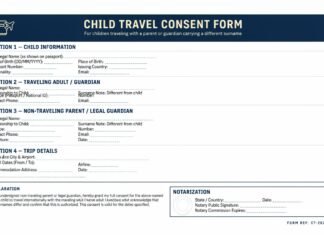
Many applicants search for a student visa Muvafakatname because they want a ready-to-use format. That is understandable. Starting from a blank page often leads to mistakes. A template helps organize the wording, signature placement, and key details so that nothing important is forgotten.

A ready format does not mean you should copy blindly. It means you should use a strong structure and then adjust it carefully to match the student’s real information. Every name, passport number, date, destination, and study detail should be checked before final submission.

Sample Wording for Student Visa Use

Below is a simple example of how a student visa Muvafakatname may be written:

I, [FULL NAME], holder of [PASSPORT OR ID NUMBER], as the parent/legal guardian of [STUDENT FULL NAME], hereby give my full consent for the student to travel to [COUNTRY NAME] for study purposes and to apply for the relevant student visa. I confirm that I am aware of the travel and academic plan and approve the student’s stay abroad for the stated period.

Signature: _______________________

Date: _______________________

This type of wording is clear, limited in purpose, and easy for an embassy officer to understand. Still, the final wording should always match the exact case, destination country, and embassy requirement.

Does the Document Need Notarization?

In some countries, a student visa Muvafakatname is accepted as a signed document, while in others notarization adds important legal strength. If the student is a minor, notarization is often strongly recommended because it confirms that the signature was verified and the consent was given voluntarily.

Even where notarization is not expressly required, it may still make the document more reliable in the eyes of foreign authorities. The stricter the destination country, the more valuable notarization becomes. You can learn more in this guide on how to get a notarized Muvafakatname.

Country Rules May Differ

One mistake applicants make is assuming that one document format works everywhere in the same way. A student visa Muvafakatname for one country may need slight adjustments for another. Some embassies want clearer wording about study purpose. Others care more about legal verification, parental information, translation, or supporting records.

If your application relates to a specific destination, it helps to compare country-level requirements. For example, if you are preparing for English-speaking destinations, review the rules discussed in Canada and UK Muvafakatname requirements so the format matches expected standards more closely.

Student Travel From Turkish Contexts

Applicants also sometimes need country-specific wording because their family documents, citizenship background, or local legal practices affect the format. This is especially true in cases involving Turkish documents, notarization habits, or national document style.

If that applies to your case, it may help to understand how the document is used in similar regional situations by reading about sample Muvafakatname for Turkish citizens.

Translation and Language Issues

If the original document is written in a language the destination embassy does not accept, translation may be necessary. A translated student visa Muvafakatname should match the original exactly. Names, dates, passport numbers, and purpose must remain consistent. A poor translation can create confusion and weaken the file.

Where required, a certified translation may be the safest option. Students and parents should not assume that an informal translation is enough for legal or visa review purposes. You may also read how to translate a Muvafakatname before submitting it internationally.

Common Mistakes to Avoid

Even when using a template, applicants often make avoidable mistakes. The most common include:

  • Incorrect student or parent names
  • Missing passport or ID numbers
  • No clear statement of study purpose
  • Missing signatures
  • Using an outdated form from another case
  • Submitting a document without checking embassy language rules

Each of these errors can delay the process. The best way to avoid them is to review the full document slowly and compare it against the passport, admission letter, and visa application details. You can also review common Muvafakatname mistakes before final submission.

How to Prepare the Final Version Before Submission

Once the student visa Muvafakatname is drafted, read it line by line. Confirm every spelling, date, and number. Make sure the parent or guardian signs where required. If notarization is needed, do not assume a scanned signature is enough. If the embassy expects a printed original, prepare that version properly.

Keep both digital and printed copies ready. Some embassies may review uploaded scans first, but later request the original document during an appointment or travel stage. If needed, you can also review how to print a Muvafakatname properly.

Helpful Guidance Before Embassy Submission

Some applicants also review the official U.S. travel and documentation guidance to better understand how consent-related papers are assessed in international travel cases. For broader background on academic visa paperwork, some readers also look at general information about student visas to understand how supporting documents fit into the overall application process.

Final Summary

A well-prepared student visa Muvafakatname can support a study abroad application by showing that the student’s travel and academic plans have proper consent. It also gives embassies a clearer view of the family, legal, or guardianship side of the case.

If you use a strong format, check every detail carefully, add signatures, consider notarization when needed, and adapt the wording to the destination country, your student visa Muvafakatname will be more useful for embassy review.

LEAVE A REPLY

Please enter your comment!
Please enter your name here