
Home Visa & Travel Muvafakatname Requirements for Canada & UK Visa

Muvafakatname Requirements for Canada & UK Visa

5
Canada UK muvafakatname requirements

Parents planning an overseas trip with a child often discover that passports and visa forms are only part of the process. In many cases, immigration officers, visa staff, airlines, and border authorities also expect written parental consent when a child is travelling alone, with one parent, or with another adult. That is where a muvafakatname becomes important. For families dealing with Canada or UK travel, understanding the right format and supporting papers can prevent delays, questions at the border, or even problems with the visa file.

This guide explains the Canada UK muvafakatname requirements in a practical way. It covers when the document is needed, what details it should include, how notarization helps, and what supporting documents parents should keep ready. The goal is simple: help families prepare a clean, credible, and travel-ready consent letter that fits real visa and border expectations.

What Is a Muvafakatname for Visa Travel?

A muvafakatname is a written consent letter from a parent or legal guardian allowing a child to travel. In international travel cases, it is often used when:

  • the child is travelling with only one parent
  • the child is travelling alone
  • the child is travelling with grandparents, relatives, teachers, or another trusted adult
  • parents are divorced, separated, or living in different countries
  • visa officers want proof that the trip has been approved by the legal guardian

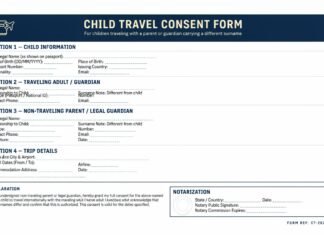
For Canada and the UK, the consent letter is not just a casual family note. It should clearly identify the child, the parents, the travel plan, and the person accompanying the child. In sensitive cases, it should also be backed by identity proof and custody-related documents. That is why families often search for clear Canada UK muvafakatname requirements before they start the visa application.

Why Canada and UK Visa Cases Need Extra Care

Canada and the UK both treat child travel documentation seriously. Their systems focus heavily on child safety, lawful guardianship, and prevention of unauthorized travel. Even when a child already has a passport and valid visa, the adult travelling with that child may still be asked to show written permission from the non-travelling parent or guardian.

For Canada, this issue often comes up when a minor is entering with only one parent or with another adult. For the UK, it can become important during a visitor visa application for a child, at the airport, or at border control when the travel circumstances raise questions. That is why the Canada UK muvafakatname requirements should be handled as part of the visa file, not as an afterthought prepared the night before departure.

When a Muvafakatname Is Usually Needed

The letter is commonly needed in the following situations:

1. Child travelling with one parent

If the mother travels with the child and the father is not joining, or the father travels while the mother stays behind, the non-travelling parent should normally give written permission.

2. Child travelling alone

If the child is flying alone, the consent letter becomes even more important. Airlines may have their own minor travel rules, and immigration staff may want to confirm who receives the child after arrival.

3. Child travelling with another adult

If a grandparent, aunt, uncle, family friend, teacher, or group leader accompanies the child, the letter should clearly name that adult and authorize them to travel with the child.

4. Divorced or separated parents

If one parent has sole custody, evidence of that legal status should be carried with the muvafakatname. If custody is shared, the other parent’s written consent is usually the safer approach.

5. Student and short-term educational travel

Some children travel for school visits, language programs, summer courses, or student-related visa purposes. In these cases, consent wording should match the child’s purpose of travel and travel dates.

Families comparing country-specific rules often notice that the basic logic is similar. Still, small differences in presentation matter, which is why reviewing the student visa muvafakatname guide can help when the child’s trip is connected to study or educational plans.

Core Canada UK Muvafakatname Requirements

The best way to meet Canada UK muvafakatname requirements is to prepare a letter that is simple, precise, and complete. The document should usually contain the following:

  • child’s full name as shown on passport
  • child’s date of birth
  • child’s passport number
  • full names of both parents or legal guardians
  • national ID or passport details of the parents, if available
  • home address and contact numbers of the parents
  • destination country or countries
  • travel dates, including departure and return date
  • purpose of travel
  • name and passport details of the accompanying adult, if any
  • statement clearly authorizing the child’s travel
  • signatures of the relevant parent or parents
  • date and place of signing

If the trip involves staying with a host, sponsor, or relative, it is also wise to include that person’s name, address, and phone number. The more clearly the travel plan is presented, the easier it is for officers to understand that the child is travelling lawfully and safely.

Canada-Specific Practical Expectations

Canada is especially careful with minors entering the country. A child may be asked to show more than just a passport and visa. In practical terms, parents should prepare a travel package, not only a single letter.

For Canadian travel, a strong file often includes:

  • the child’s passport
  • a copy of the child’s birth certificate
  • the signed muvafakatname or consent letter
  • a photocopy of the non-travelling parent’s passport or national ID
  • custody order, death certificate, or guardianship papers if relevant
  • contact details of the adult responsible for the child in Canada, where applicable

If the child is travelling alone or with only one parent, officers may want to see that the absent parent knows about the trip. This does not mean every case is disputed or risky. It simply reflects Canada’s strong child protection approach. For families preparing region-based travel papers, reviewing a format example such as the muvafakatname Schengen sample can help them understand how travel consent language is normally structured, even though the destination rules are different.

UK-Specific Practical Expectations

The UK also expects proper written consent where a child under 18 is travelling without both parents or legal guardians. In visa-related cases, the consent letter should support the child’s application by showing that the trip is approved, the stay is arranged responsibly, and the child’s accommodation and care are clear.

A well-prepared UK-related file may include:

  • the child’s passport
  • signed consent from parent or guardian
  • travel details and return plan
  • details of where the child will stay in the UK
  • details of the adult caring for or accompanying the child
  • proof of relationship with the parent or guardian
  • custody or legal responsibility documents when necessary

For visitor visa cases, the UK side usually looks for a realistic and traceable travel arrangement. A vague letter saying “I allow my child to travel” is often too weak. It should connect the child, the trip, the adult in charge, and the planned stay in a way that makes sense on paper.

Should the Muvafakatname Be Notarized?

In many cases, yes. Notarization is one of the safest ways to strengthen the document. While every case does not always require notarization by law, it helps prove that the signatures are genuine and that the letter was formally executed. This matters more when:

  • parents are divorced or separated
  • the child is travelling with someone other than a parent
  • the visa file is already sensitive or document-heavy
  • the family expects extra questions at the airport or border
  • the consent letter will be translated

For families trying to meet Canada UK muvafakatname requirements properly, notarization is often a smart preventive step. It does not replace supporting evidence, but it can make the overall file look more credible and organized.

What If One Parent Cannot Sign?

Real life is not always simple. Sometimes one parent is absent, unreachable, deceased, or legally stripped of custody rights. In those situations, parents should avoid improvising. Instead, they should support the file with the right legal document, such as:

  • sole custody order
  • court decision on guardianship
  • death certificate of the other parent
  • official affidavit explaining the situation
  • police or court records, if relevant

The key point is consistency. If the muvafakatname is signed by only one person, the rest of the file should clearly explain why. An unexplained missing signature can create avoidable suspicion. This issue can also arise for dual nationality or residence-based cases, which is why country-context articles such as the muvafakatname for Turkish citizens guide can be useful for families handling cross-border paperwork.

Recommended Structure of the Letter

A practical muvafakatname for Canada or UK visa purposes should be written in a formal, direct style. A strong structure usually looks like this:

Opening identification

Name the parent or guardian giving consent, with ID or passport details and address.

Child information

List the child’s full legal name, date of birth, passport number, and nationality.

Travel authorization

State clearly that the parent authorizes the child to travel to Canada, the UK, or both, depending on the plan.

Travel details

Add flight dates, expected return date, destination city, and trip purpose.

Accompanying adult details

If the child is not travelling alone, identify the adult accompanying the child and describe the relationship.

Accommodation or care details

If the child will stay with a sponsor, relative, or school-related host, include the name, address, and contact number.

Signature and certification

The letter should be signed and, ideally, notarized. If it is translated, both the original and translation should be kept together.

Common Mistakes That Cause Problems

Many families prepare a consent letter but still make small errors that weaken the document. Common mistakes include:

  • using nicknames instead of passport names
  • missing passport numbers
  • failing to mention return travel dates
  • not naming the adult travelling with the child
  • leaving out contact details
  • submitting an unsigned or poorly scanned document
  • forgetting custody papers in separated-parent cases
  • providing a translation without the original document

When trying to satisfy Canada UK muvafakatname requirements, details matter. Immigration staff often review papers quickly. A letter that is complete, readable, and logically supported is easier to accept than one that leaves open questions.

Do Translation and Apostille Matter?

If the original consent letter is not in English, a certified translation is strongly recommended for both destinations. Since Canada and the UK work primarily in English for visa and border review, a translated document can make the file much easier to assess.

An apostille is not required in every case, but some families choose it when they want the document to carry more formal international recognition. This is more likely in complex custody cases or where multiple countries are involved before the child reaches the final destination.

Best Practice Checklist Before Submission

Before the visa application or departure date, review this checklist:

  • Is the child’s passport valid?
  • Does the muvafakatname use the exact passport name?
  • Are travel dates clearly written?
  • Does the letter name the accompanying adult?
  • Are parent contact details included?
  • Is the letter signed by the correct parent or guardian?
  • Is notarization completed where appropriate?
  • Have you attached birth certificate and ID copies?
  • Do you have custody or guardianship evidence if needed?
  • Is there a certified translation if the original is not in English?

This careful review is often the difference between a smooth trip and a stressful one. Families who understand the Canada UK muvafakatname requirements early usually prepare better documents and avoid last-minute corrections.

Final Thoughts

A muvafakatname for Canada or UK travel is not just paperwork for the visa file. It is a practical document that shows the child’s trip is approved, traceable, and legally supported. For minors travelling internationally, that is exactly what visa teams and border officers want to see.

The safest approach is to treat the consent letter as part of a full documentation set. Include clear child and parent details, exact travel information, proper signatures, and supporting records where necessary. If the case involves separation, sole custody, guardianship, or travel with a non-parent adult, it is even more important to prepare the letter carefully and formally.

In short, the Canada UK muvafakatname requirements are manageable when the document is honest, specific, and properly supported. Families who prepare early, use clear wording, and keep all related papers together are in the best position for a clean visa process and a smoother journey.

For official travel and immigration guidance, see Canada’s official guidance on minors travelling to Canada and this supporting guide to child travel consent letters.

LEAVE A REPLY

Please enter your comment!
Please enter your name here